Why Indian Entrepreneurs Must Stop Thinking Like Western Startups
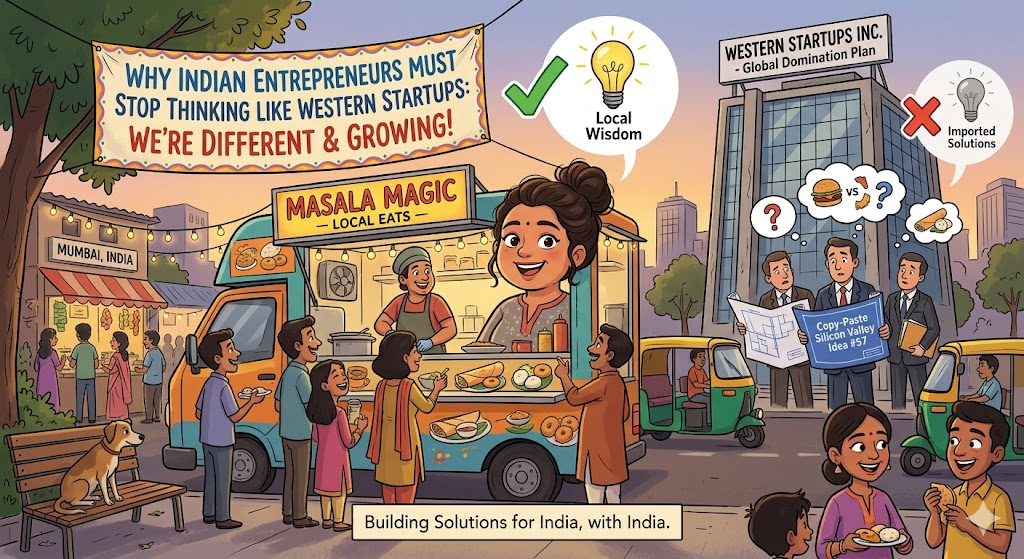
India is one of the fastest-growing consumer markets in the world, yet many Indian entrepreneurs unknowingly apply a Western playbook to a market that operates by completely different rules. The core mistake lies in misunderstanding a fundamental truth: Western markets are bottom-up, while India is a top-down market. In the West, consumers freely experiment with new products, take small risks, and make independent purchasing decisions even when a brand is entirely unknown. Indian consumers, however, are wired differently — and understanding that difference can be the turning point between a business that struggles and one that scales.
In a bottom-up market, word spreads organically from individual to individual. A single satisfied customer tells a friend, who tells another, and a brand grows from the ground up through grassroots adoption. This model works remarkably well in cultures where personal experimentation is normalized and social risk is low. But in India, purchasing decisions — especially for new or unfamiliar products — are deeply tied to social legitimacy. Before an Indian consumer opens their wallet, they need to know that someone they trust, respect, or look up to has already validated the choice.
This is where the concept of preselection becomes critical for Indian businesses. Preselection means that your product or service must already carry the stamp of approval from an authority, institution, or community that your target audience respects. It is not enough to have a good product. You need credible testimonials from recognizable figures, strategic partnerships with trusted brands or organizations, and visible associations with institutions that your consumers hold in high regard. These signals do the heavy lifting before your sales pitch even begins.
Practically speaking, this means Indian entrepreneurs need to invest early in social proof infrastructure — not just marketing. Getting featured in a respected publication, collaborating with an industry body, onboarding a well-known advisor, or securing an endorsement from a community leader can unlock consumer trust far faster than any paid ad campaign. These associations act as a permission slip in the Indian consumer's mind, reducing the perceived risk of trying something new and unfamiliar.
The bottom line is this: in India, trust is the product. No matter how innovative your offering is, if it lacks social legitimacy in the eyes of your audience, growth will remain slow and uphill. Indian entrepreneurs who recognize this early and build their go-to-market strategy around authority, credibility, and community endorsement are the ones who win. Stop chasing clicks. Start chasing credibility — because in the Indian market, credibility converts.
Creativity Meets Code.
Join our mailing list
© Copyright xklsv 2026. All Rights Reserved
xklsv