Types of Backlinks Explained: Which Ones Actually Move the Needle?
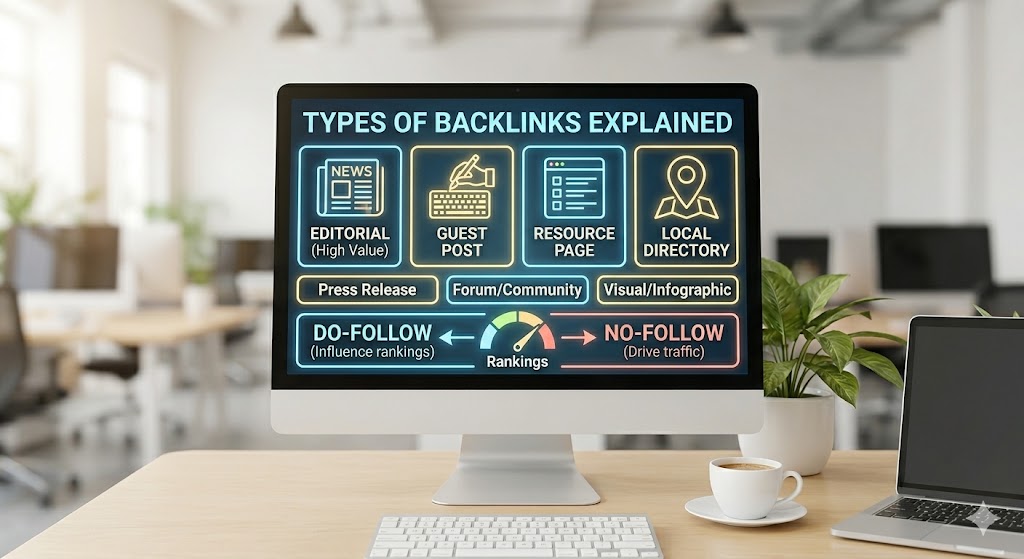
Knowing that backlinks matter is one thing. Knowing which types of backlinks to go after — and which ones to avoid — is what separates a smart SEO strategy from a wasted one.
Here is a complete breakdown of every major backlink type, what it does, and how to use it.
1. Editorial Backlinks
These are the most valuable backlinks you can earn. An editorial backlink happens when another website links to your content naturally, without any outreach, payment, or agreement — simply because they found your content credible and worth referencing.
Examples: a news site citing your research, an industry blog linking to your guide, a journalist quoting your data.
Why they matter: They carry the highest trust signal because they are 100% organic. Search engines treat them as genuine endorsements.
How to earn them: Publish original research, in-depth guides, unique data, and content that gives other writers a reason to reference you.
2. Guest Post Backlinks
You write a high-quality article for another website in your industry. In return, you include a link back to your site — usually within the article body or in the author bio.
Why they matter: They are one of the most reliable and scalable ways to build authority in your niche. When done on relevant, reputable sites, they carry significant SEO value and introduce your brand to a new audience.
How to use them: Focus on sites that are relevant to your industry and have genuine readership. A guest post on a respected platform is worth far more than one on a low-traffic blog created purely for link exchanges.
3. Resource Page Backlinks
Many websites maintain resource pages — curated lists of tools, guides, and references for their audience. Getting your content listed on one of these pages earns you a highly contextual, editorial-quality backlink.
Why they matter: These links are placed in high-trust environments and carry strong relevance signals.
How to earn them: Identify resource pages in your industry and reach out to the site owner with a clear, concise pitch explaining why your content belongs on their list.
4. Business Directory Backlinks
Listing your business on reputable online directories — Google Business Profile, Justdial, Sulekha, industry-specific directories — creates backlinks to your website.
Why they matter: Useful for local SEO and building a basic online presence. They also help establish NAP consistency — your Name, Address, and Phone number appearing uniformly across the web, which is a local ranking factor.
How to use them: Set them up once and maintain them. Do not rely on directories alone — they are a foundation, not a strategy.
5. Press Release and News Backlinks
When you distribute a press release through a wire service or get covered by an online news outlet, those publications typically link back to your website.
Why they matter: Links from news domains carry strong authority. Coverage from established media also builds brand credibility that goes beyond SEO.
How to use them: Reserve press releases for genuinely newsworthy moments — product launches, awards, significant milestones, partnerships. Overusing them for trivial announcements devalues the links.
6. Social Media Backlinks
Links to your website shared on platforms like LinkedIn, Facebook, Twitter, and Instagram.
Why they matter: Most social media backlinks are no-follow, meaning they do not pass direct SEO ranking power. However, they drive traffic, increase content visibility, and raise the likelihood that someone with a website will discover your content and link to it organically.
How to use them: Use social media as a distribution channel for your content, not as a primary link-building strategy.
7.Forum and Community Backlinks
Links shared in forums like Reddit, Quora, or niche industry communities where you contribute answers and reference your website as a resource.
Why they matter: When done genuinely, they drive highly targeted referral traffic from people actively looking for answers in your area of expertise.
How to use them: Contribute real, helpful answers first. Only link to your website when it is directly relevant and adds genuine value. Spam-style forum links are penalised by Google and damage your credibility in communities that matter.
8. Image and Infographic Backlinks
When you create an original infographic, chart, or visual asset and other websites embed it, they typically link back to you as the source.
Why they matter: Visual content tends to be shared widely and earns backlinks passively over time. A well-designed infographic on a topic people regularly search for can generate links for months or years.
How to use them: Create visuals that simplify complex information. Promote them to bloggers and publishers in your space who regularly use supporting visuals in their articles.
9. Comment Backlinks
Links placed in the comment sections of blogs and articles.
Why they matter: Very little direct SEO value today. Most comment links are no-follow. Google has been aware of comment spam for over a decade.
When they are useful: A thoughtful, on-topic comment on a high-traffic industry blog can still bring relevant visitors to your site. Use them sparingly and only when you have something genuine to add to the conversation.
10. Broken Link Building
This is a proactive strategy where you identify broken links on other websites — links that point to pages that no longer exist — and reach out to the site owner suggesting your content as a replacement.
Why it works: You are solving a problem for the website owner while earning a backlink. The conversion rate on these outreach emails is significantly higher than cold link requests.
How to use it: Use tools like Ahrefs or Semrush to find broken backlinks on relevant sites, then identify or create content that fits the context of the original broken link.
Do-follow vs No-follow: The Difference That Matters
Every backlink is either do-follow or no-follow.
Do-follow links pass SEO value — what is commonly called link juice — directly to your site. These are the links that directly influence your rankings.
No-follow links tell search engines not to pass ranking power. They still drive traffic and contribute to a natural, diverse link profile.
A natural backlink profile contains a healthy mix of both. A profile made up entirely of do-follow links from the same types of sources looks unnatural and can trigger algorithmic or manual penalties from Google.
Where to Focus Your Efforts
For most businesses building their online presence, the priority order looks like this:
Editorial links through original, high-quality content. Guest post links through targeted outreach to relevant publications. Resource page links through direct outreach with a strong pitch. Business directory links as a one-time setup for local SEO. Press and news links tied to genuine business announcements. Social and community links to support content distribution.
Backlinks are a long-term play. The businesses that treat link building as a consistent, quality-first discipline — not a one-time campaign — are the ones that dominate search results and hold their positions.
If you want help building a backlink strategy for your business, our SEO team at xklsv is here to help.
Creativity Meets Code.
Join our mailing list
© Copyright xklsv 2026. All Rights Reserved
xklsv